mesh-instancing
Ten thousand lit cubes in a single draw call.
babashka 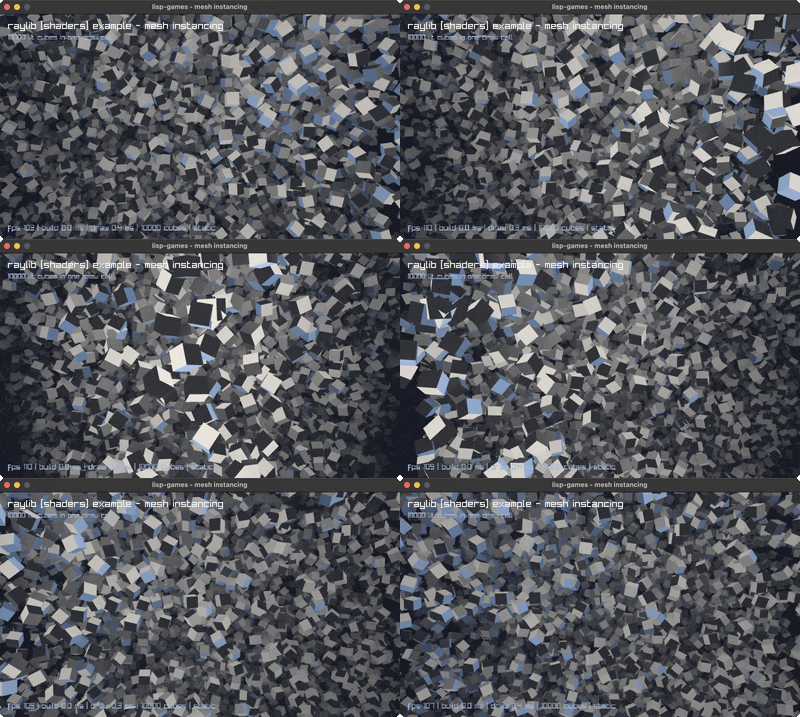 | jolt 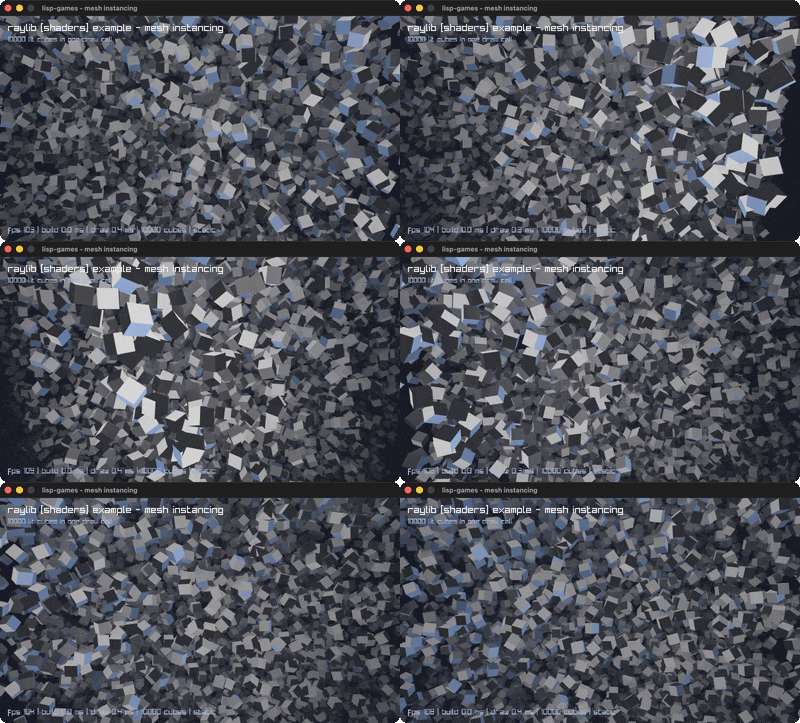 |
Clojure/JVM 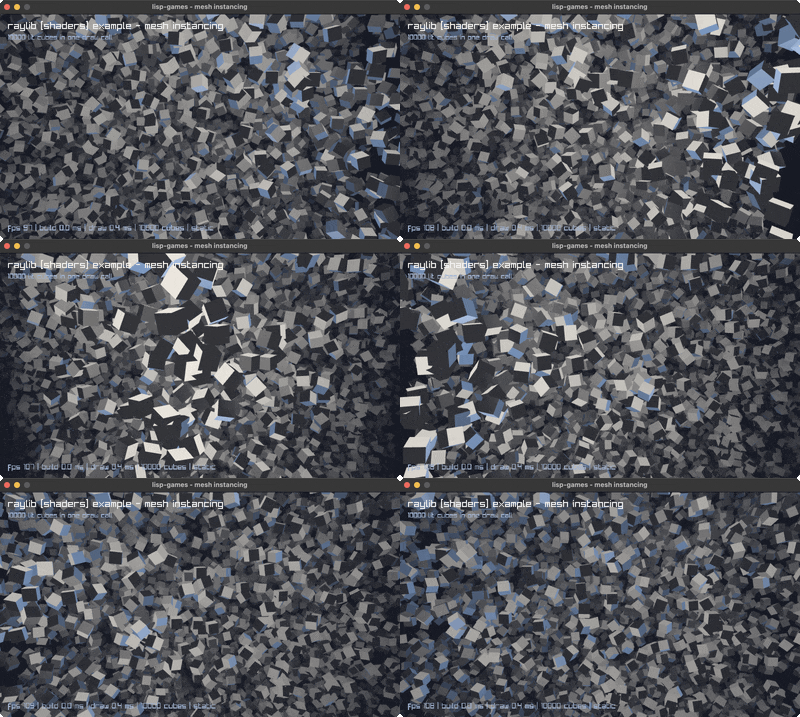 | jank 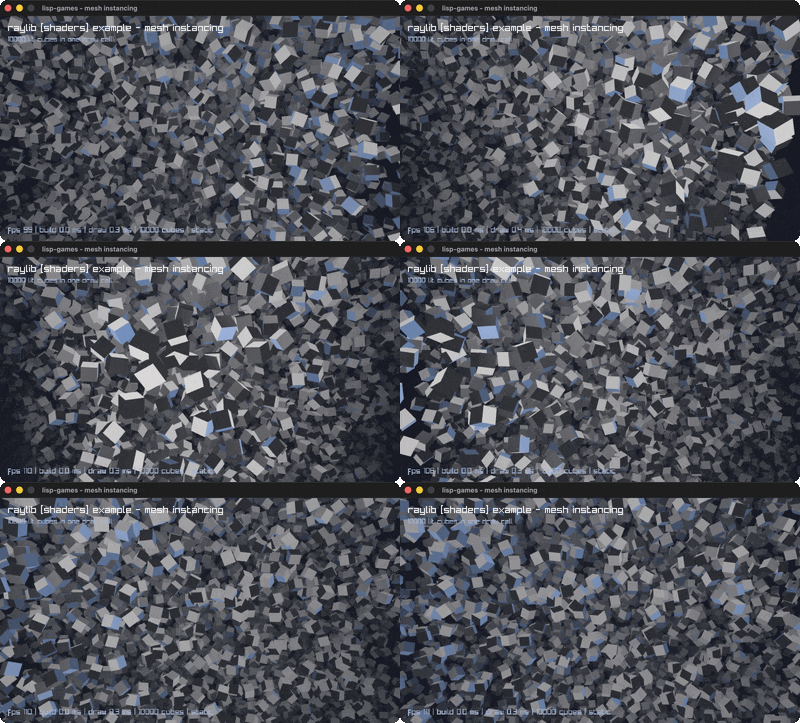 |
The example is raylib's own, by Ramon Santamaria and contributors. See credit.md.
What instancing is for
Instancing moves the per-copy transform out of the draw loop and into a vertex attribute. One mesh and one material go to the GPU alongside an array of N matrices, and the vertex stage reads its own matrix per instance from in mat4 instanceTransform. The alternative, a DrawMesh per cube, is ten thousand draw calls a frame.
Nothing has to be wired up for that attribute. raylib 6.0 resolves it by name when the shader loads.
Two modes, and only one is a benchmark
raylib's example builds its matrices once and turns the field by orbiting the camera. That is the right shape for showing instancing off and the wrong shape for comparing runtimes: per frame the CPU does essentially nothing, so all four report the same frame rate and what you measured is your GPU.
So every port takes a spin mode that rebuilds each matrix every frame. Then the frame is per-instance arithmetic plus marshalling into foreign memory, which is the runtime's own contribution.
| Mode | Instances | build | draw | fps | |
|---|---|---|---|---|---|
| static | 10000 | all four | 0.0 ms | ~0.4 ms | ~114 |
| spin | 10000 | Clojure | 1.9 ms | 0.4 ms | 110 |
| jank | 6.5 ms | 0.3 ms | 115 | ||
| jolt | 27.2 ms | 0.3 ms | 33 | ||
| babashka | 50.5 ms | 0.4 ms | 20 | ||
| spin | 2000 | Clojure | 0.7 ms | 0.2 ms | 106 |
| jank | 1.1 ms | 0.2 ms | 114 | ||
| jolt | 5.5 ms | 0.2 ms | 115 | ||
| babashka | 9.9 ms | 0.3 ms | 87 |
The draw column barely moves, whatever the runtime and whatever the count, because one draw call is one draw call. Everything that changes is build.
About 27x from top to bottom, against helitorus's 7x on the same four runtimes. Same ordering, very different distances: these FFIs are further apart at moving bytes than the languages are at arithmetic.
The sterner FFI test
Mesh is 120 bytes returned by value from GenMeshCube, Material is 40 from LoadMaterialDefault, and DrawMeshInstanced takes both by value plus a pointer to the matrix array. Every layout size in the babashka port was checked against a C program compiled with the same header rather than counted by eye.
How each runtime handles that is the comparison:
- jank has the least to do. Mesh and Material cross with no ceremony at all, because it has the real header and the C++ compiler knows the types.
- babashka declares them as
[:struct ...]layouts. This works, and a fortnight ago the docs in the sibling repo claimedbabashka.fficould not do it. - jolt has them through the raylib-jlt wrapper.
- Clojure declares seven calls itself with coffi's
defcfn, plus its own::shaderand::materialaliases, because raylib-clj's split the Shader pointer into two ints and flatten the nesting.
Two ways to draw one cube instead of ten thousand
Both happened here, and neither showed up in the numbers.
The first spike had no instancing shader, so the default material ignored the transforms entirely. The Clojure port assoc'd :shader onto raylib-clj's ::material, which flattens the nested Shader, so the key was silently ignored and the default shader stayed. It ran at 114 fps reporting plausible timings the whole time.
Pick one representation of a struct and use it end to end. Mixing raylib-clj's shader functions with nested aliases throws Cannot invoke java.lang.Character.charValue(), which names nothing useful.
And look at the render.
jank's two matrix paths
The jank port ships spin and spin-raymath: the rotation computed in jank, or by raylib's C helpers. About 3x apart, both verified in C to produce an identical matrix.
cd mesh-instancing/mesh-instancing-jank && bb ab
The cross-runtime table above quotes the in-language path, because the other three compute the rotation themselves. For ordinary jank code, raymath is the better choice and costs no new dependency.
Running it
cd mesh-instancing/mesh-instancing-babashka && bb mesh
bb bench 10000     # spin mode, the number worth comparing