helitorus
A helix of n windings around a torus, swept into a tube, turned by the mouse.
babashka 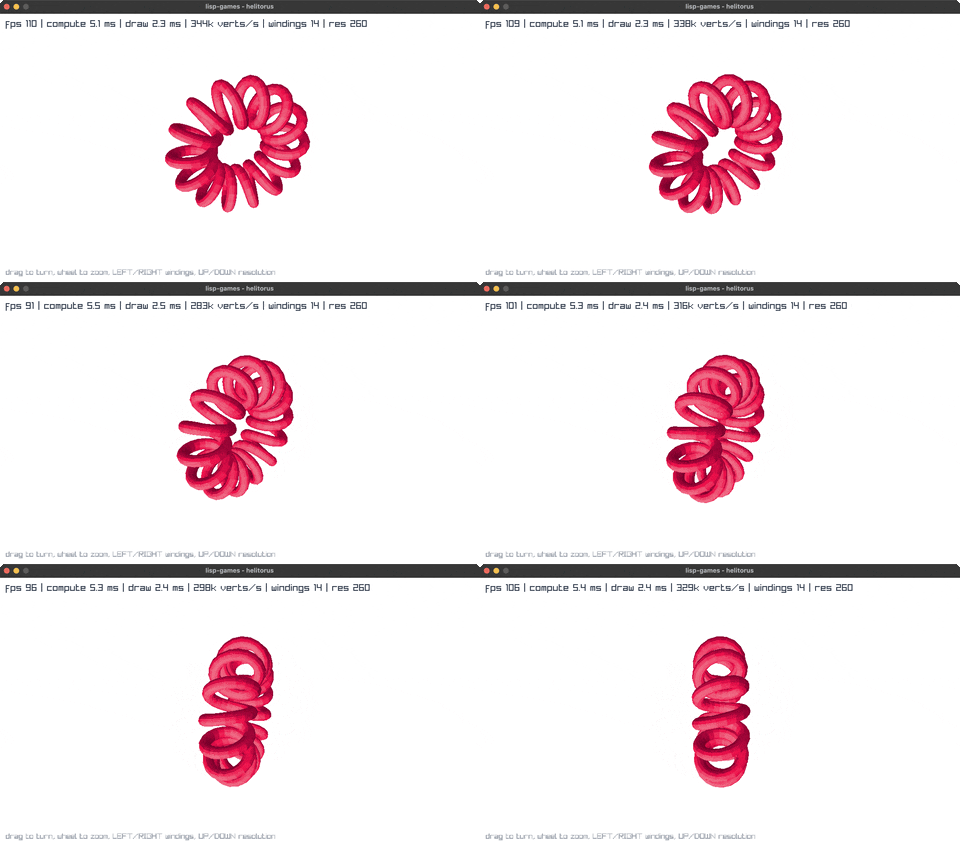 | jolt 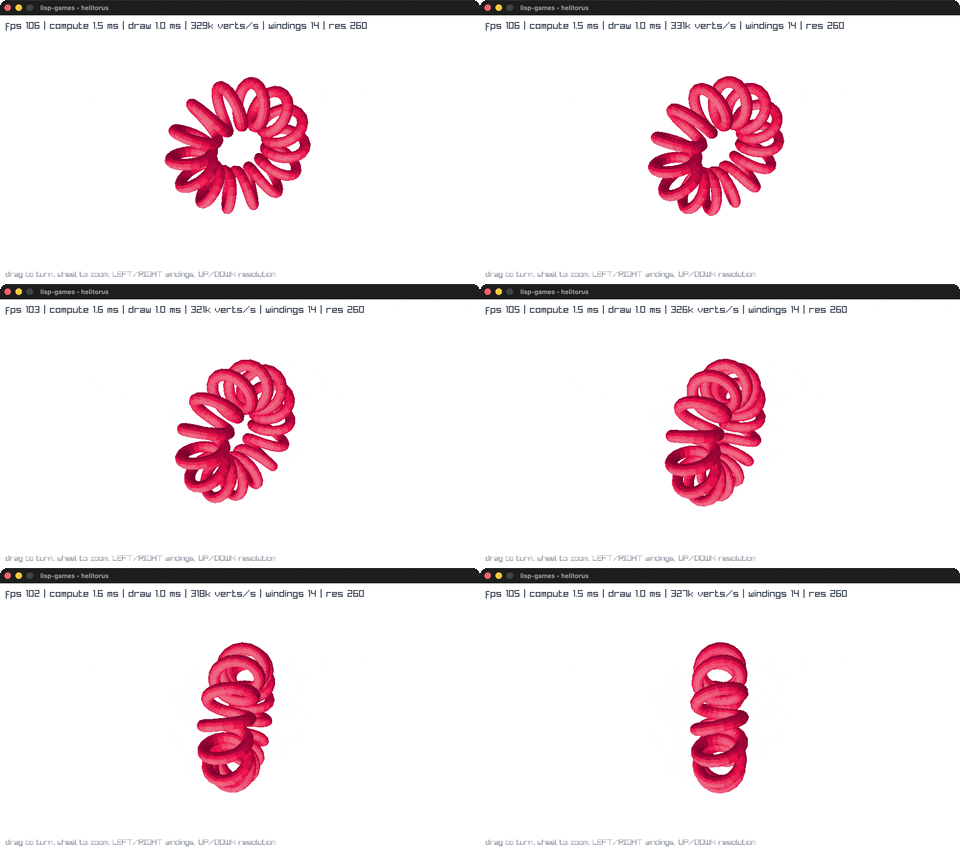 |
Clojure/JVM 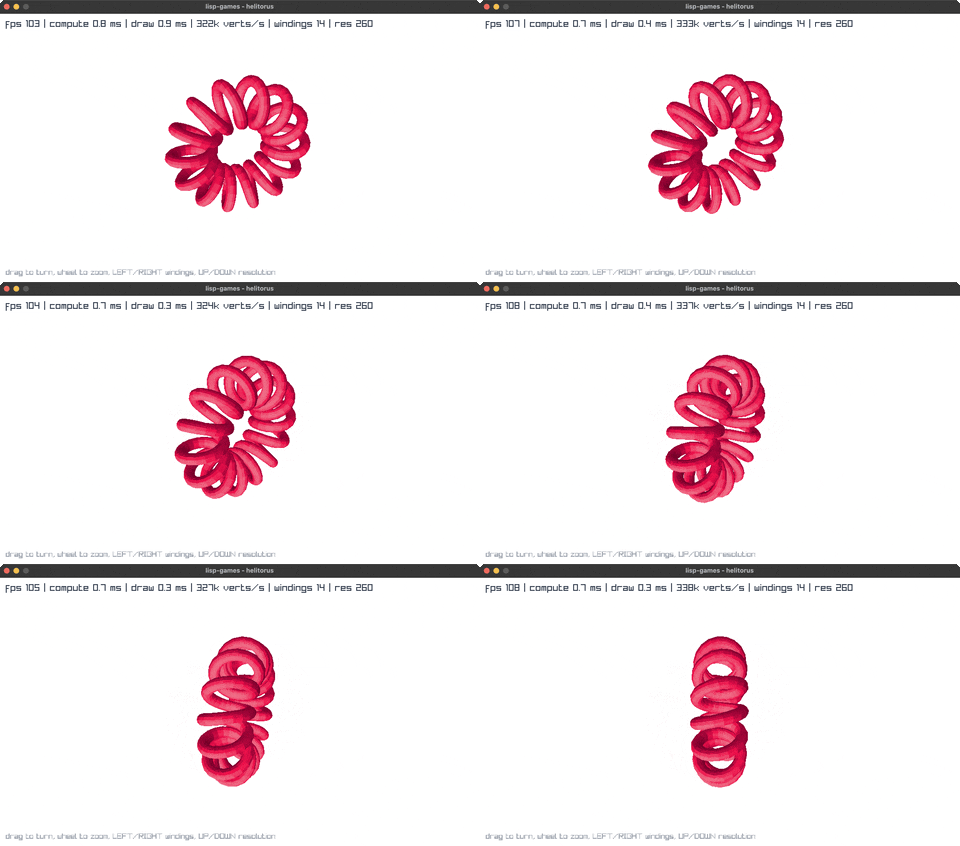 | jank 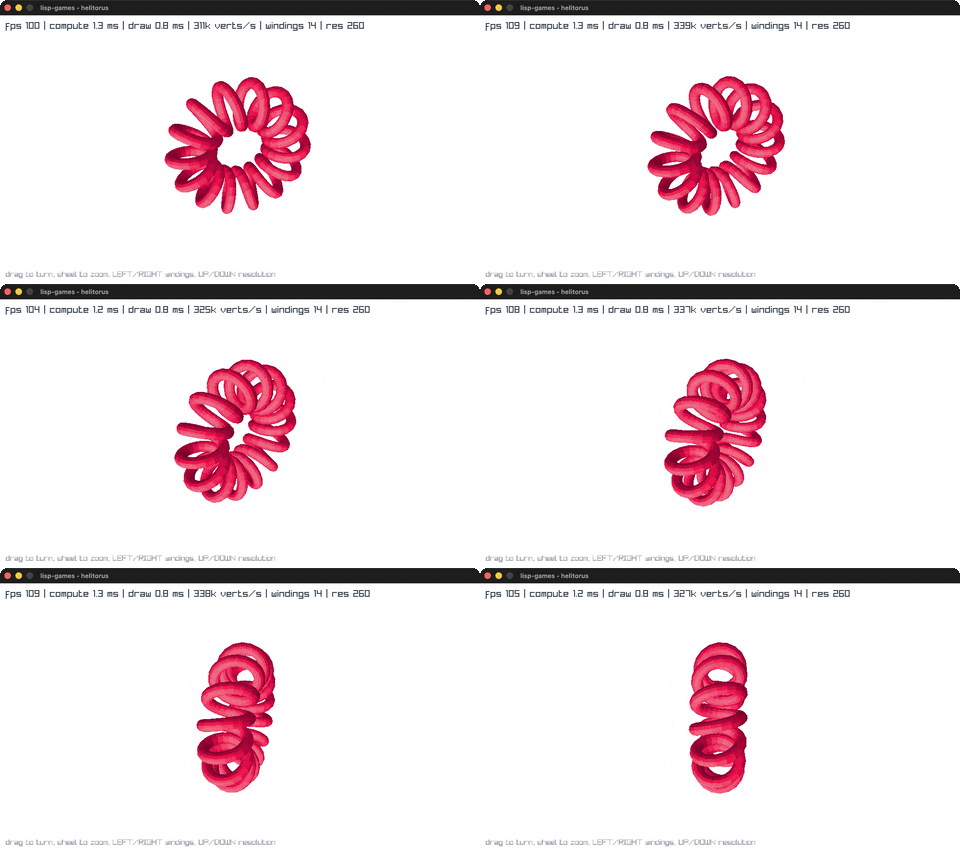 |
The program is Michiel Borkent's. See credit.md.
What it does per frame
The surface is generated rather than modelled. Walk the spine of a helix that itself follows a torus, build a local frame at each point, sweep a circle around that frame, and the result is a tube. Projection, lighting and hidden-surface removal all happen in Clojure rather than in raylib, which is what makes it worth porting: it shows what the rlgl layer alone can carry.
At the default resolution that is 260 rings of 12 points, so 3120 vertices rebuilt, projected, shaded and depth-sorted from scratch, sixty or more times a second.
Two things make that fast enough to animate. The buffers are reused every frame, so a frame allocates nothing. And the painter ordering runs over an order array that survives the frame, so consecutive frames start almost sorted and the insertion sort is nearly linear.
What it costs
On an M1 Pro, every port optimised.
| Resolution | compute | draw | fps | |
|---|---|---|---|---|
| 260 (default) | Clojure | 0.7 ms | 0.3 ms | 115 |
| jank | 1.2 ms | 0.8 ms | 115 | |
| jolt | 1.5 ms | 1.0 ms | 115 | |
| babashka | 5.1 ms | 2.3 ms | 115 | |
| 900 (max) | Clojure | 2.4 ms | 1.0 ms | 116 |
| jank | 4.3 ms | 2.8 ms | ~108 | |
| jolt | 5.0 ms | 3.3 ms | ~95 | |
| babashka | 18.0 ms | 8.3 ms | ~35 |
A JIT on top, two AOT-compiled runtimes within a whisker of each other, then an interpreter. About 7x from top to bottom.
The top half is the interesting half. At 260 rings all four sit at exactly the same frame rate, because none of them is the bottleneck there. It takes 900 rings before the gap becomes something a viewer would see, and even there babashka is still drawing a moving picture. That is further than an interpreter usually gets credit for.
The trap every port meets
Each runtime has its own spelling of the same problem, and getting it wrong is silent in three of the four cases.
babashka wants aset-double and aset-int rather than plain aset, which on bb goes through java.lang.reflect.Array at about 6.7µs a write against roughly 37ns typed. That comment is in the original and it earns its place.
jolt wants ^double/1 and ^int/1 on the buffers.
Clojure on the JVM wants ^"[D" and ^"[I" on the defs. Without them every aget resolves reflectively, which cost thirty times on compute. Note the hint has to be the array class: ^doubles on a def resolves to clojure.core/doubles, the function, and the namespace will not compile.
jank has no primitive arrays at all. double-array, int-array and aget all exist in clojure.core.jank and all throw TODO: port ..., still true against upstream at 2026-09-20. So its buffers are malloc'd natives, cast to (:* double) or (:* int), carried as cpp/box values because a native pointer cannot be a jank fn's parameter.
None of these is caught by a plain load gate. See reading-the-numbers.md.
Running it
cd helitorus/helitorus-babashka && bb helitorus
Drag to turn, wheel to zoom, LEFT and RIGHT change the winding count, UP and DOWN the resolution along the spine. For jank, build and run the -O3 binary rather than lein run:
cd helitorus/helitorus-jank && bb release && bb run-release